VCON · Sustainability
VCON’s
GreenBuild Initiative
As the global construction industry continues to grapple with its environmental impact, companies are increasingly under pressure to adopt sustainable practices. Accounting for over 39% of carbon dioxide emissions worldwide, the building and construction sector is both a major contributor to climate change and a key driver of potential solutions.
The United Nations Sustainable Development Goals (UN SDGs) offer a universal framework for addressing global challenges, including poverty, inequality, environmental degradation, and climate change.
The following section explores how innovative approaches in green precast concrete support and advance a selection of these goals. Through the application of resource-efficient technologies, low-carbon practices, local economic development, and strategic partnerships, these initiatives not only enhance ASEAN’s infrastructure but also contribute to the global movement toward sustainable development.
Building with nature in mind
Save the planet with VCON
We consider our impact on people and planet in everything we create.
Save forests and heal the climate.
Reduce your climate impact and save forests. We can’t heal the climate without stopping deforestation. Hollow Core Slabs can help save millions of hectares of forests as wood temporary support is not required during installation.
Materials that make a difference
Green cement. Lower carbon.
VCON uses Green Cement Type 3 to produce hollow core slabs, enabling carbon-footprint savings of 0.7 times compared with Cement Type 1 used in other construction systems.
Hollow core precast concrete systems emit up to 80% less carbon than cast-in-situ and plank systems.
Performance in use
Reduce energy consumption
Hollow core’s ability to absorb and release heat can drastically reduce air conditioning and its CO2 output in hot climates.
Did you know?
Steel use is reduced as it is prestressed before the concrete is poured, requiring less steel per square metre. Moreover, precast hollow core floors are much lighter, so less concrete and steel are needed in the foundations. The number of internal load-bearing walls can also be considerably reduced.
Thinking beyond one building
Reduce carbon emissions.
According to the Journal of Applied Engineering Science, carbon footprint can be reduced by up to 80% by using old hollow core slabs from an old building to construct a new building with the same span and load.
The study was conducted to investigate which floor system has less environmental impact for use in the construction of a semi-detached house in the U.K., using a carbon calculator from the Environment Agency, United Kingdom Government.
Source: Abu Qadourah, Ala Falahat (2022), Investigate the carbon footprints of three intermediate flooring systems, ISSN 1451–4117.
Environment Agency, United Kingdom
VCON Hollow Core Slabs
Leading the way in sustainability
We are thrilled to announce that VCON Hollow Core Slabs have achieved the lowest carbon emission rates, as certified by the Thailand Greenhouse Gas Management Organization (TGO).
This outstanding recognition highlights our commitment to sustainability and innovation in construction.
Experience the world’s greenest floor system
VCON Hollow Core Slabs are engineered with cutting-edge technology, making them the most eco-friendly choice for your construction projects.
Here’s why they stand out.
Minimal carbon footprint
Our slabs have been meticulously designed to reduce carbon emissions, ensuring a greener environment for future generations. In comparison to other concrete floor systems of the same thickness, VCON Hollow Core Slabs boast the lowest carbon emission rates, making them the superior choice for sustainable construction.
High performance
Despite their eco-friendly nature, VCON Hollow Core Slabs do not compromise on strength and durability. They offer superior structural integrity and performance.
The whole building life cycle
From raw materials to reuse and recovery, consider both embodied emissions and operational energy and water use.
- 01 · EMBODIED
Product
- Extract raw materials
- Transport to factory
- Manufacture products
- 02 · EMBODIED
Construction
- Transport to site
- Construct the building
- 03 · IN USE
Maintain and use
- Use and maintenance
- Repair and replacement
- Refurbishment
- Operational energy and water
- 04 · EMBODIED
End of life
- Demolish the building
- Haul away waste materials
- Recycling and disposal
- 05 · RECOVERY
Beyond the life cycle
- Reuse
- Recovery
Cost-effective
With reduced material usage and efficient production processes, our slabs provide an economical solution without sacrificing quality.
Sustainable construction
By choosing VCON, you are contributing to sustainable construction practices and supporting the global effort to combat climate change.
More than 50 years of commitment
Elevating what it means to be green
For over 50 years, VCON has redefined green precast concrete manufacturing. Our founder’s commitment to sustainability encompassed not only technical innovation but also the planting of over 100,000 trees since 1972.
A major breakthrough was the adoption of hollow-core slab technology, which has helped prevent an estimated 2.3 million tons of CO2 from entering the atmosphere compared to emissions from conventional solid slabs. That’s equivalent to the carbon absorption of approximately 150 million trees or 60,000 hectares of forest, about the size of Nonthaburi Province or the city of Portland, Oregon.
These figures, based on VCON’s production data in Thailand, were calculated using industry-aligned carbon accounting methods. In addition to reducing emissions, our green precast technologies have improved working conditions and reinforced our long-standing commitment to sustainability.
Keeping resources in circulation
Beyond product design, VCON applies industrial symbiosis principles by recycling concrete slurry, reusing water in production, and sourcing supplementary cementitious materials to replace clinker in cement. These measures help decrease embodied carbon and align with life-cycle thinking, in support of SDG 12 (Responsible Consumption and Production) and SDG 13 (Climate Action).
Reusing water
Reuse water in the production process.
Recycling slurry
Recycle concrete slurry through industrial symbiosis.
Investing in green cement
Source supplementary cementitious materials to replace clinker.
VCON also invests in green cement technologies and collaborates with cement suppliers and academic institutions to improve mix designs for maximum sustainability.
VCON’s commitment to sustainability
VCON’s sustainability efforts center on advanced green precast concrete technologies designed to significantly reduce carbon emissions at every stage of the product lifecycle. By combining innovations in material science, precision manufacturing, and energy efficiency, VCON has emerged as a regional leader in low-carbon construction materials.
Join us in making a difference.
Choose VCON Hollow Core Slabs for your next project and experience the benefits of the world’s greenest floor system. Together, we can build a better, more sustainable future.
Contact VCON
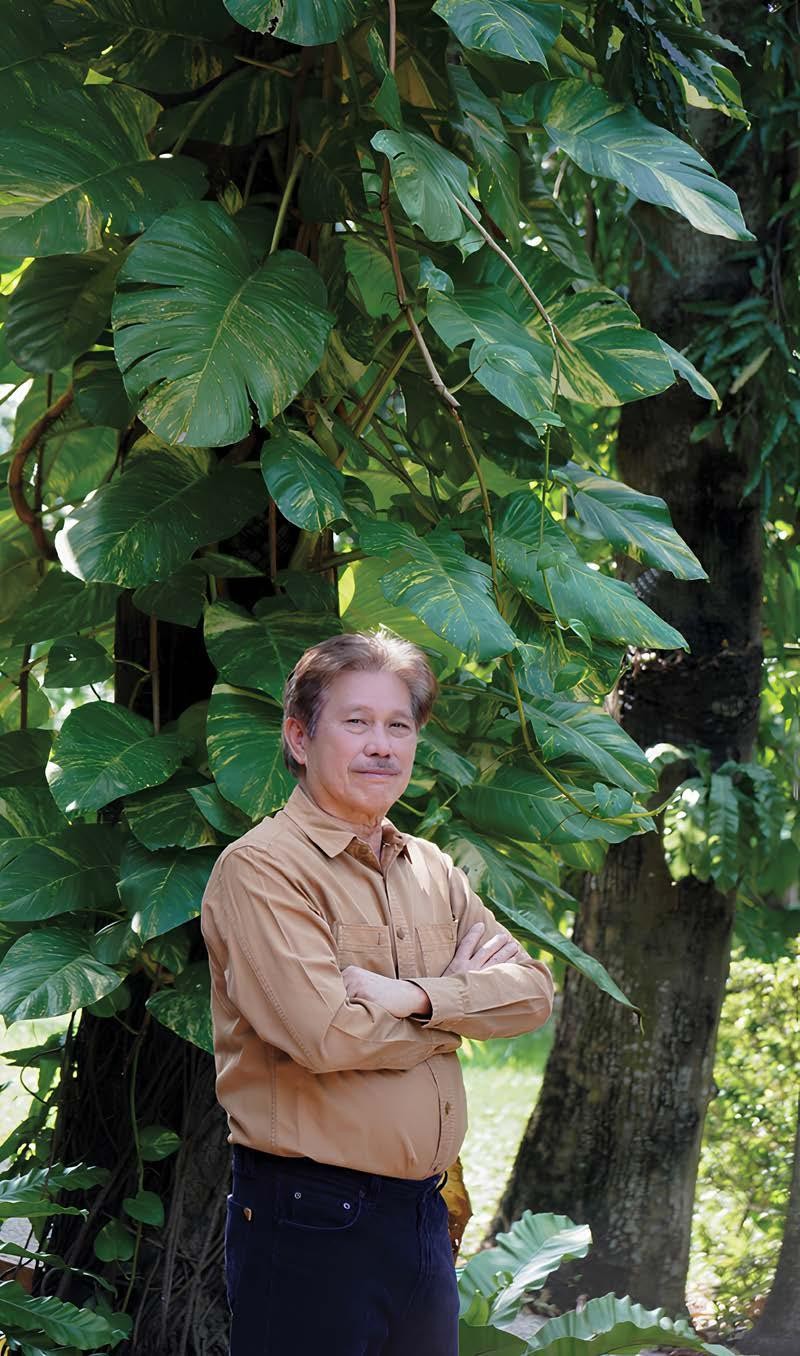
“The true meaning of life is to plant trees under whose shade you do not expect to sit.”Rungsie ChaichanavongChairman, VCON GROUP
We will enhance our culture of sustainability, invest in learning opportunities for our people, expand our green network across the company, and continue to achieve the evolving green building goals of clients.