EDUCATION
VCON · Learning for a sustainable future
VCON’s NextGen Engineering Program
Building Thailand’s future engineers through continuous learning
At VCON, we believe that investing in education is one of the most effective ways to build a safer, more sustainable construction industry. Through the NextGen Engineering Program, VCON translates American Concrete Institute (ACI) standards and sustainable construction principles into practical learning experiences for students, lecturers, engineers, and public-sector professionals.
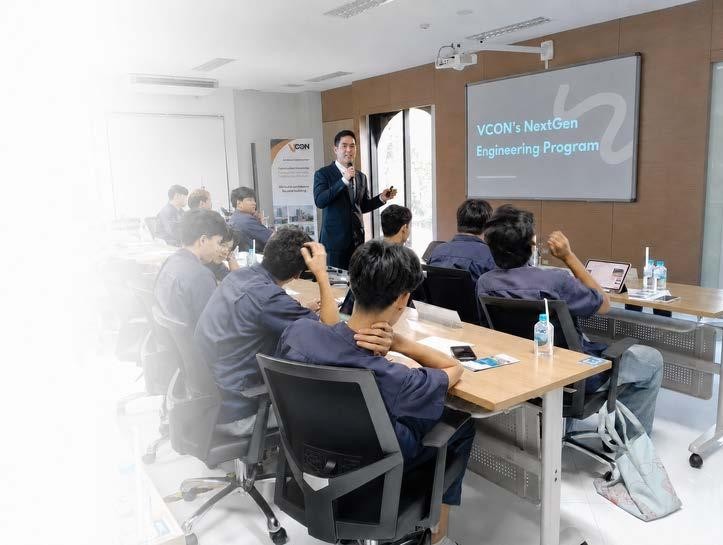
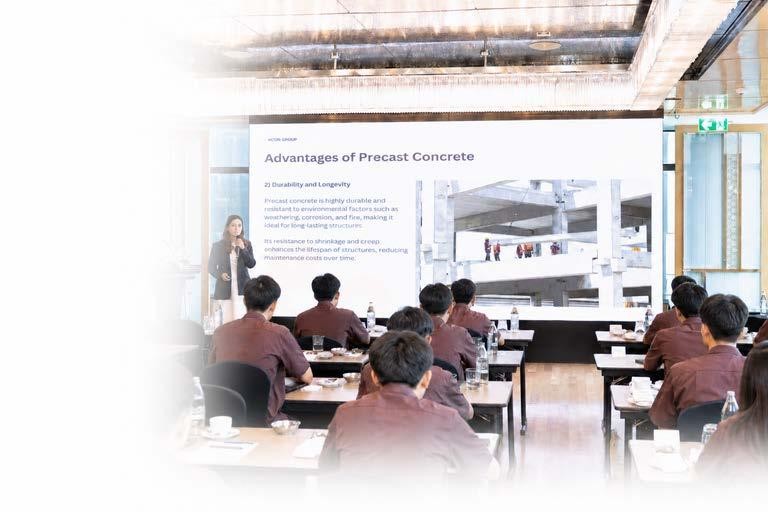
Throughout 2025, VCON expanded its educational outreach even further, strengthening relationships with academic institutions across Thailand while enhancing international collaboration.
Our programs continue to bridge classroom learning with practical engineering applications, preparing graduates to contribute to sustainable infrastructure development.
“Today, the NextGen Engineering Program is one of VCON’s flagship ESG initiatives under the People pillar. By equipping students, educators, engineers, and public-sector professionals with practical knowledge based on international standards, the program supports safer construction, lower-carbon development, and broader access to engineering careers.”
2025 Program highlights
Expanding learning. Connecting institutions.
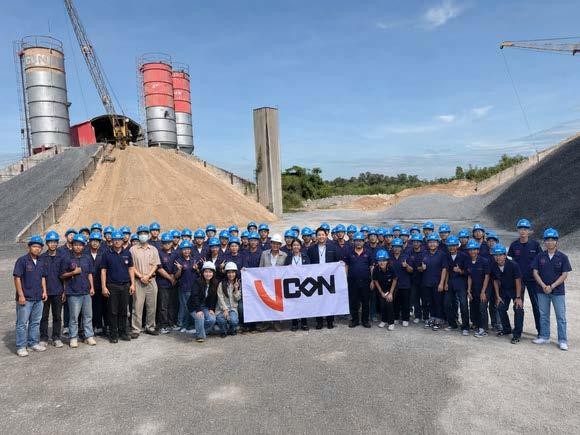
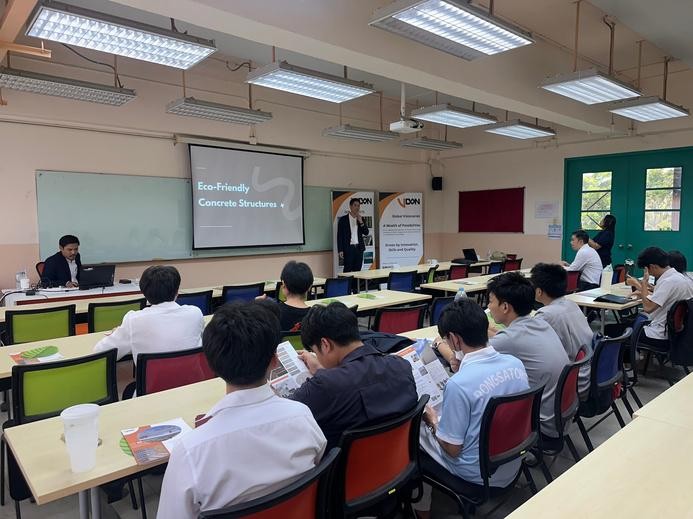
Throughout 2025, VCON successfully organized 18 engineering seminars, an increase of 29% compared with 2024, across 15 universities in Thailand and neighboring countries, reaching students from civil engineering, construction management, and sustainable infrastructure programs.
Participating educational institutions
- Chulalongkorn University
- Thammasat University
- King Mongkut’s Institute of Technology
- Mahidol University
- Kasetsart University
- Srinakharinwirot University
- Naresuan University
- Rajamangala University of Technology
- Pibulsongkram Rajabhat University
- Prince of Songkla University
- Chonburi Technical College
- Thanyaburi Technical College
- Burapha University
- Suranaree University of Technology
- Asian Institute of Technology (AIT)
International academic partners
- INSA Toulouse, France
- National Polytechnic Institute of Cambodia
- University of California San Diego, USA
Continuing to inspire future engineers
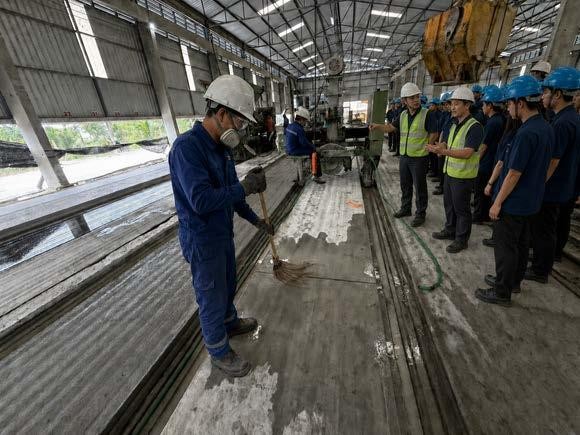
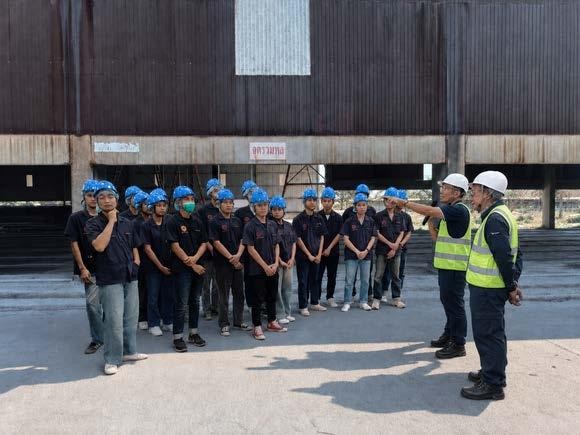
Beyond classroom seminars, VCON continued its long-running Engineering Externship Program, giving university students the opportunity to experience engineering in real construction environments.
In 2025, students participated in:
- Factory visits
- Construction site observations
- BIM demonstrations
- Sustainable precast manufacturing
- Low-carbon concrete technologies
- Engineering career mentoring
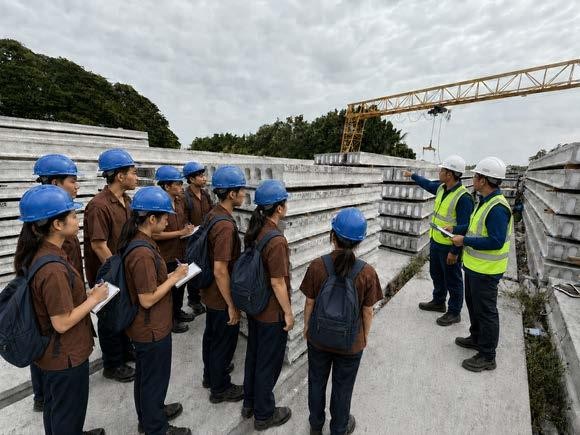
Through these activities, participants gained valuable insight into modern construction methods that improve efficiency while reducing environmental impacts.
The program also encouraged students to understand how digital engineering, industrialized construction, and ESG principles are transforming the future of infrastructure.
2025 educational impact
Developing talent for a sustainable future
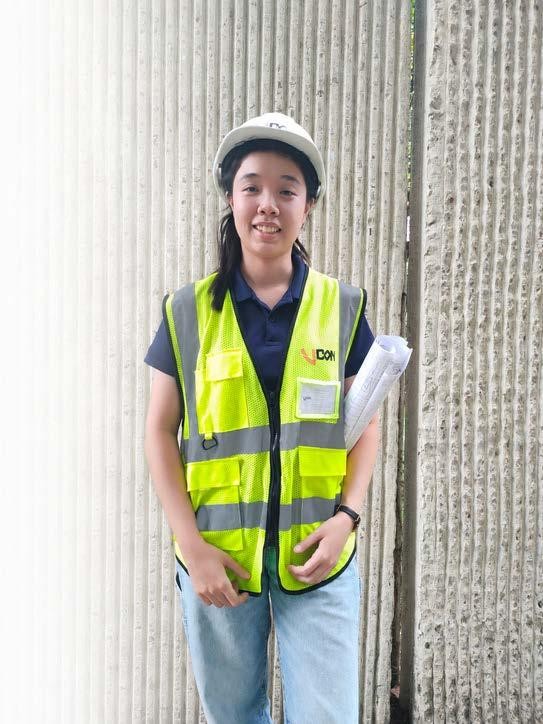
In 2025, VCON welcomed its largest group of engineering students since the program began. Participation from female engineering students continued to grow, reflecting increasing diversity within Thailand’s engineering profession.
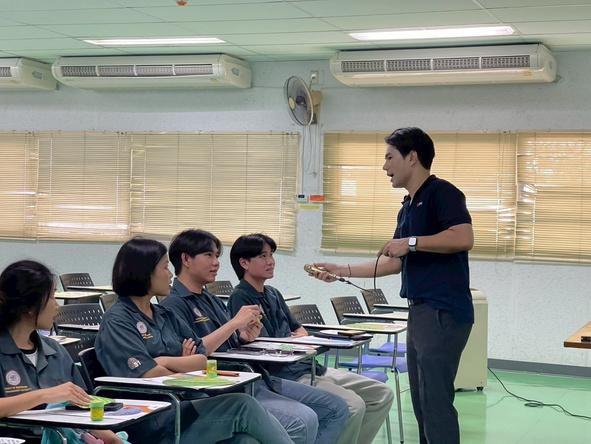
Our engineers served not only as instructors, but also as mentors, project advisors, and career coaches, sharing practical experiences from infrastructure, precast technology, digital construction, and sustainable engineering.
Through these engagements, students experienced how engineering can contribute to climate resilience, resource efficiency, and smarter urban development.
Education performance dashboard 2025
| Indicator | 2024 | 2025 | Change |
|---|---|---|---|
| Engineering seminars | 14 | 18 | Increase of 4 (+29%) |
| Educational institutions engaged | 11 | 15 | Increase of 4 (+36%) |
| Students participated | 350 | 470 | Increase of 120 (+34%) |
| Externship program | 10 | 12 | Increase of 2 (+20%) |
| Female participation | 24% | 31% | Increase of 7 percentage points |
| Engineering mentors | 32 | 45 | Increase of 13 (+41%) |
| Training hours | 1,150 | 1,850 | Increase of 700 (+61%) |
| International partners | 3 | 3 | No change |
Building on the success achieved through 2025, VCON will continue expanding its educational partnerships, strengthening collaboration with universities, and developing future engineering leaders who can accelerate Thailand’s transition toward sustainable construction.
Through continuous investment in people, innovation, and knowledge sharing, we remain committed to creating long-term value for students, the construction industry, and society.
Taking NextGen further
Working with educators and policymakers
Why we expanded the program
After reviewing the progress of the NextGen Engineering Program, we came to a simple conclusion: direct training is valuable, but it can only reach a limited number of people at one time.
If we want knowledge to remain useful for many years, we must also work with the people who teach future civil engineers. Lecturers can adapt what they learn, use it in their classes, and pass it to new groups every year.
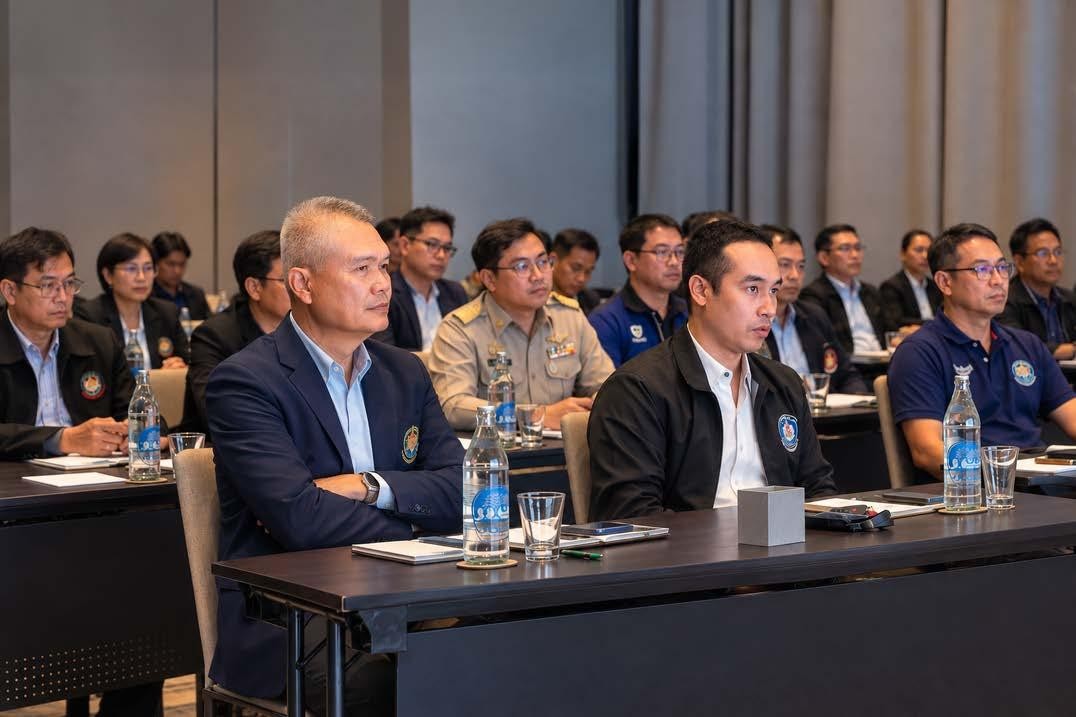
Government officials and professional engineers can carry technical knowledge into industry discussions, public requirements, and future policy decisions. VCON therefore expanded NextGen in 2025 to include civil engineering lecturers, government officials, and members of Thailand’s professional engineering community.
Amplify knowledge through educators
Empower lecturers to bring new knowledge into the classroom and inspire the next generation of civil engineers every year.
Strengthen policy and public impact
Equip government officials with technical insights to support evidence-based decisions and future policy development.
Advance the professional engineering community
Engage professional engineers to apply knowledge in industry practice, standards, and national development.
Working with civil engineering lecturers
In 2025, VCON trained 60 civil engineering lecturers from nine institutions:
- Chulalongkorn University
- Thammasat University
- Mahidol University
- King Mongkut’s Institute of Technology
- Naresuan University
- Pibulsongkram Rajabhat University
- Rajamangala University of Technology
- Thanyaburi Technical College
- Chonburi Technical College
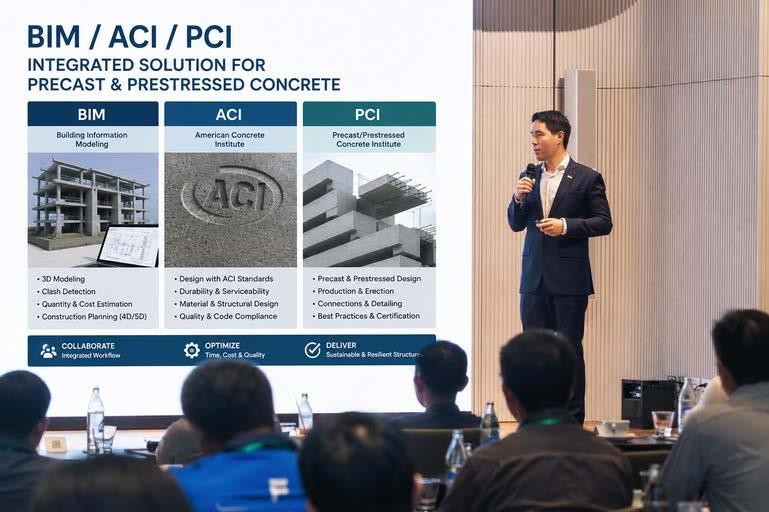
BIM
Building Information Modeling connects design and project coordination with modern construction delivery.
ACI and PCI knowledge
International references for structural safety, concrete quality, precast manufacturing, and prestressed-concrete applications.
Low-carbon construction
Practical approaches to resource efficiency and sustainable engineering.
The training covered Building Information Modeling (BIM), low-carbon construction, American Concrete Institute standards, and practical knowledge from the U.S.-based Precast/Prestressed Concrete Institute.
We selected these subjects because they connect classroom learning with the way modern construction projects are designed and delivered. BIM can help project teams coordinate their work, identify design conflicts before construction begins, reduce errors, and use materials more efficiently. ACI and PCI knowledge gives lecturers international references for structural safety, concrete quality, precast manufacturing, and prestressed-concrete applications.
Our role was not to rewrite or control the institutions’ formal curricula. Instead, we shared technical content, examples, and industry experience that lecturers could use to enhance what they already teach. Each lecturer can decide how the material best fits their courses and the needs of their learners.
Reaching beyond Bangkok and beyond universities
In 2025, we made a deliberate effort to bring more training outside Bangkok. Activities were held at Naresuan University in Phitsanulok, Thanyaburi Technical College in Pathum Thani, and Chonburi Technical College.
Phitsanulok
Naresuan University
Pathum Thani
Thanyaburi Technical College
Chonburi
Chonburi Technical College
We also expanded our focus beyond universities because technical colleges are closely connected to Thailand’s construction workforce. Their educators prepare people for practical roles in construction, production, drafting, site supervision, and related technical work.
Universities develop engineers, researchers, and designers, while technical colleges prepare people who often apply construction knowledge directly on projects and in factories. Working with both types of institutions allows NextGen to support a broader part of the profession and make BIM, international standards, and sustainable construction knowledge more accessible outside Bangkok.
Universities
Develop engineers, researchers, and designers.
Technical colleges
Prepare people for practical roles in construction and related technical work.
Stronger together
Working with both creates broader access and greater industry impact.
Working with government and the engineering profession
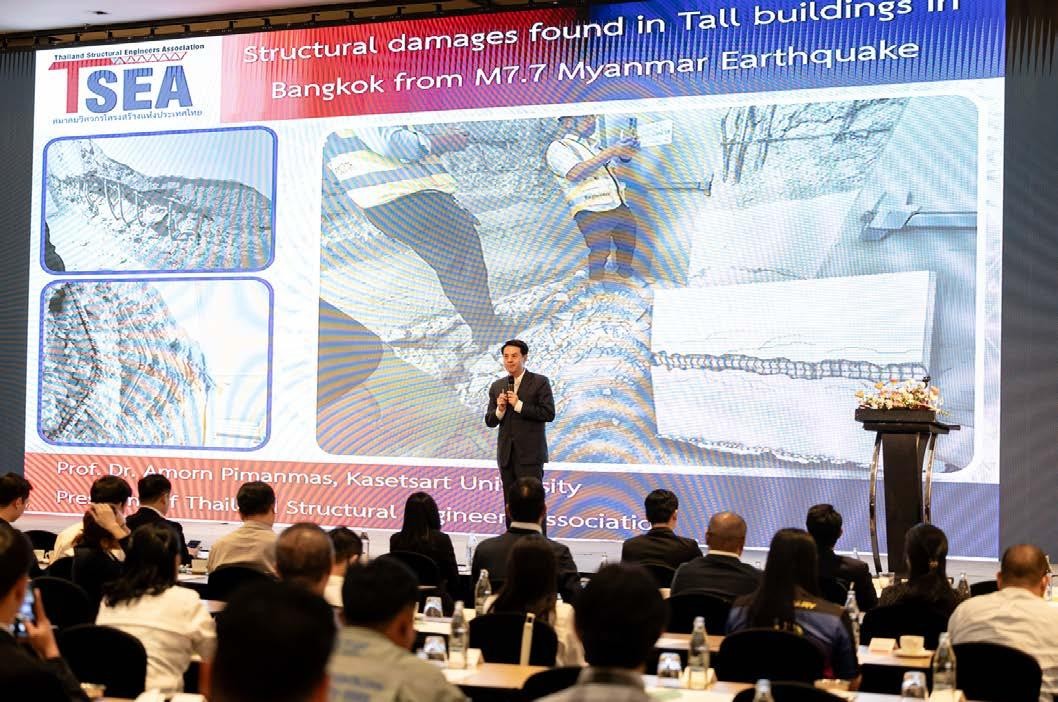
Government officials and engineering professionals trained through the Department of Public Works and Town & Country Planning and the Thailand Structural Engineers Association.
The sessions covered structural safety, BIM, low-carbon materials, precast and prestressed-concrete technology, and international engineering practices. We used practical examples to discuss how these approaches can contribute to safer buildings, more efficient construction, and lower environmental impacts.
The Department of Public Works and Town & Country Planning has an important role in Thailand’s construction and planning environment. Giving officials access to current technical knowledge can support more informed discussions about public requirements, construction standards, and future regulations.
The Thailand Structural Engineers Association connects NextGen with practicing engineers. Its members can carry relevant knowledge into projects, professional networks, technical discussions, and continuing professional development.
We do not suggest that one training session will immediately change a regulation. That is not how policy develops. Our aim is to make practical knowledge available to people who participate in those discussions and decisions.
Turning training into measurable impact
Because the expansion to educators and policymakers began in 2025, it is too early to assess long-term changes in teaching practice or regulation. We can, however, report what has been delivered and establish a clear framework for measuring future outcomes.
2025 results from NextGen program expansion
- 60 civil engineering lecturers trained
- Nine educational institutions represented
- 48 government officials and professional engineers trained
- Three provincial institutions directly engaged
- Training delivered on BIM, ACI and PCI knowledge, structural safety, and low-carbon construction
The main opportunity is the reach created through educators. If each of the 60 lecturers uses the knowledge in two classes per year, with an average of 30 people in each class, the program could reach approximately 3,600 people annually:
Lecturers × classes per year × people per class
Potential annual reach, rather than a measured result already achieved.
Looking ahead
Our targets for 2026
At least 80% of trained lecturers will apply one or more NextGen topics in their teaching.
At least 18 existing courses or teaching modules will be enhanced with BIM, ACI, PCI, or low-carbon construction content.
Lecturer-led teaching will reach at least 3,000 people.
At least 85% of participating educators and officials will report improved knowledge relevant to their work.
At least two follow-up technical sessions will be held with government or professional partners.
We will track these results through lecturer surveys, course-material reviews, institutional confirmation, attendance records, and partner feedback.
For VCON, success will not be measured only by attendance. It will be measured by whether lecturers continue teaching the knowledge, whether professional engineers apply it, and whether government partners use it to support better-informed discussions and decisions.
By working with educators, government officials, and professional engineers, VCON is helping knowledge travel further than we could achieve alone.
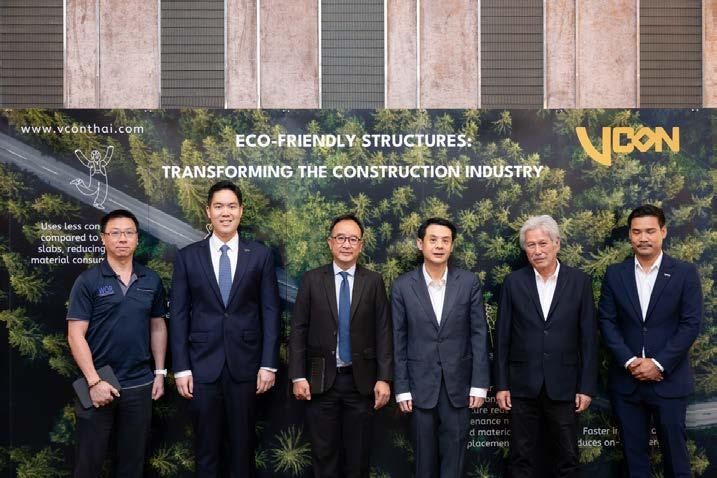
Quality education
VCON Scholarship Program
Empowering the next generation through education — 36 years of continued support
At VCON, we recognize that access to education can contribute to long-term opportunity, family well-being, and workforce development. For more than 36 years, the VCON Scholarship Program has supported employees’ children in pursuing their education at accredited schools and universities.
Eligibility and program administration
- The program is available to eligible children of VCON employees across different job levels and employment functions.
- Applicants are assessed according to established academic criteria, including a minimum GPA of 3.0 or an equivalent “B” average.
- Scholarship applications are administered through VCON’s Human Resources Department.
- The same eligibility requirements are applied to qualifying applicants regardless of whether their parents work in operational, technical, administrative, or management positions.
The scholarship provides financial support for eligible education-related expenses at an accredited institution selected by the recipient. The program is intended to reduce part of the financial burden associated with education while supporting continued academic development.

Access to education
Supporting continued academic development at accredited institutions.
Family well-being
Reducing part of the financial burden associated with education.
Long-term opportunity
Helping develop future skills and the workforce.
2025 scholarship performance highlights
Based on 40 additional scholarships awarded during 2025, the cumulative number of scholarships provided through the program reached 1,540. The estimated number awarded during the year is broadly consistent with the historical program average of approximately 43 scholarships per year, reflecting the company’s long-term commitment to supporting education for employees’ families.
Based on the available program records, approximately 98% of tracked scholarship recipients completed a bachelor’s degree. Approximately 64% of tracked graduates pursued degrees in engineering, construction, technology, or related academic disciplines.
The remaining recipients pursued education in other fields based on their interests, academic qualifications, and career goals.
| Indicator | 2024 | 2025 | Change |
|---|---|---|---|
| Continuous program support | 35+ years | 36+ years | +1 year |
| Cumulative scholarships awarded | 1,500 | 1,540 | +40 |
| Bachelor’s degree completion | 98% | 98% | No change |
| Engineering and related fields | 62% | 64% | +2 percentage points |
Building tomorrow, sustainability
Education today.
Opportunity tomorrow.
Sustainable growth for all.
Contact VCON