Engineering structural solutions for mission-critical data centers
Artificial intelligence, cloud computing, and digital transformation are driving unprecedented investment in data centers across Southeast Asia. As demand accelerates, developers face increasing pressure to deliver facilities faster while meeting higher standards for quality, sustainability, and long-term performance.
Helping build Southeast Asia's next generation of digital infrastructure.
At VCON, we engineer precast concrete structural systems specifically for mission-critical data centers. With more than 50 years of precast concrete manufacturing expertise and successful delivery on some of Southeast Asia's largest hyperscale data center developments, VCON has become a trusted structural partner for mission-critical infrastructure.
Why structural systems matter
Every month saved during construction allows faster time to operation.
Traditional cast-in-place construction relies on sequential activities that extend project schedules and increase exposure to price volatility, weather delays and labor shortages. In contrast, precast construction allows structural components to be manufactured off-site while foundations are being built, enabling multiple construction activities to proceed simultaneously.
The result is a shorter construction schedule, improved project certainty, and faster time to operation - allowing earlier installation of electrical systems, cooling infrastructure, server racks, and other mission-critical equipment.
Sequential site activities
Parallel factory and site work
Temporary timber and steel formwork
No temporary timber and steel formwork
High onsite labor demand
Factory manufactured components
Weather-dependent curing
Immediate installation on delivery
Higher material waste
Optimized material usage
Longer floor cycles
Faster access for MEP trades
Schedule acceleration
A structural system built for shorter critical paths.
Illustrative programme based on a 300-working-day baseline and 20 working days per month. Final durations should be adjusted by project scale, span, loading, plant capacity, and site logistics.
Structural performance
Designed around the realities of technical buildings.
Speed
Parallel manufacturing allows structural components to be produced while foundations and site preparation continue. Rapid installation can shorten floor cycles and give MEP teams earlier access.
Sustainability
VCON precast concrete components optimize material usage, while factory-controlled production reduces waste and minimizes temporary timber and steel formwork.
Quality
Factory production improves dimensional consistency, concrete control, repeatability, and installation predictability for facilities where tolerances matter.
Efficiency
Lower dead load, longer spans, fewer columns, and coordinated layouts help owners preserve flexibility for heavy equipment, cable routing, and future expansion.
Key Benefits of Precast Structural Systems
Selecting the right structural system impacts construction speed, floor cycle efficiency, MEP integration, future scalability, embodied carbon, and overall project risk. The criteria below highlight the key factors considered by developers, consultants, EPC contractors, and hyperscale operators when evaluating structural solutions for mission-critical facilities.
Cost Certainty
Controlled manufacturing and repeatable construction processes improve cost certainty and schedule reliability.
Installation Cycle
Typical installation cycles of 3–7 days per zone, enabling faster construction and earlier MEP installation.
Typical Span
Typical spans of 8–16 m, reducing internal supports and increasing layout flexibility.
Loading Suitability
Designed for high-load areas, including data halls, electrical and mechanical rooms, battery rooms, and roof plant areas.
Dead Load
30–50% lighter than solid slabs, reducing demands on foundations and supporting structures.
Construction Efficiency
Reduced temporary works and on-site labor help improve safety, productivity, and project delivery.
MEP Integration
Early MEP access with pre-planned openings and provision for future penetrations, subject to structural design requirements.
Thermal Performance
A flat soffit improves airflow, while the hollow core voids reduce heat transfer and enhance thermal performance.
Fire Resistance
Up to 4-hour fire resistance, designed to achieve project-specific fire ratings in accordance with applicable codes.
Embodied Carbon
Designed for lower embodied carbon, supported by certified product carbon footprint data.
Construction workflow
From design assist to commissioning access.
VCON connects early engineering, factory production, logistics, installation, and MEP readiness into one predictable delivery model.
Design Assist
Optimize spans, load paths, connections, slab depths, and construction sequence.
Factory Production
Manufacture VCON precast concrete components under controlled quality systems.
Logistics Planning
Coordinate delivery batches, crane positions, lifting plans, and site access windows.
Rapid Installation
Install components immediately on arrival with predictable floor-by-floor sequencing.
MEP Access
Open work fronts earlier for electrical, cooling, fire protection, and process systems.
Data Centers
Data center owners need structural systems that help the project reach equipment installation, commissioning, and revenue operation sooner. The VCON precast concrete system supports uptime-driven project economics through schedule certainty, cleaner sites, earlier MEP work, and lower embodied carbon.
Data center workflow focus
- Early structural grid coordination
- Factory production during foundation works
- Floor installation and clear access routes
- Cooling, power, and cable pathway coordination
- Commissioning readiness and phased expansion
Proven experience
Case studies
Leading-Edge Data Center Engineering and Strategic Site Design
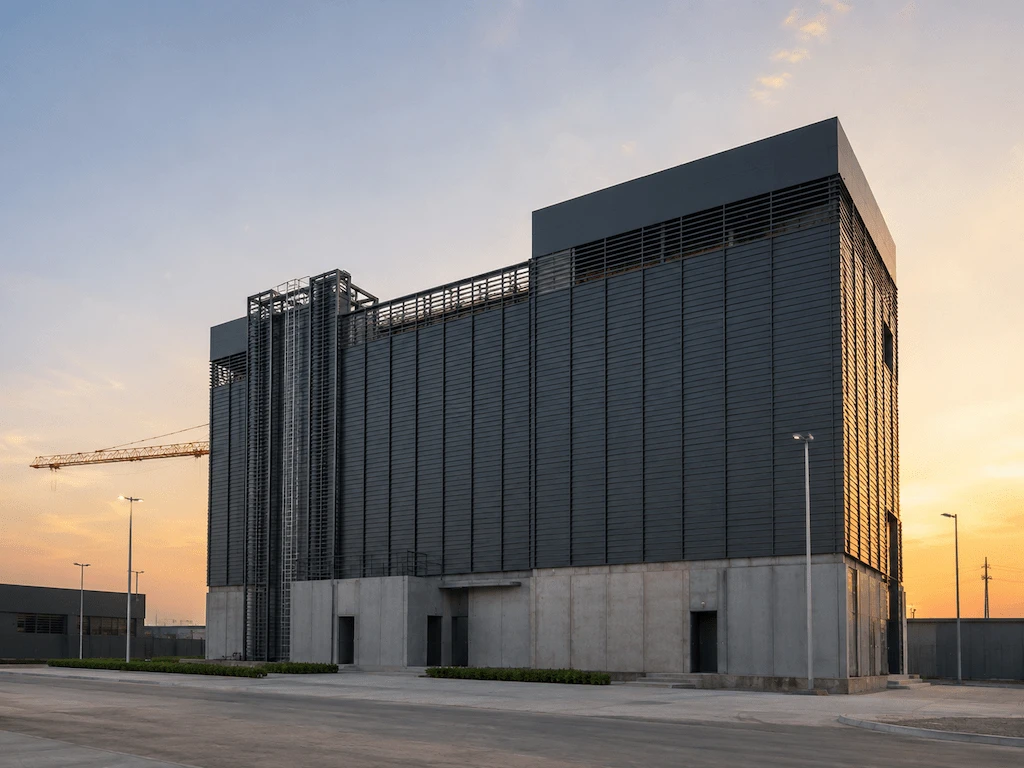
DAMAC Data Centers
Enabling faster delivery of mission-critical digital infrastructure through factory-manufactured structural components and rapid on-site installation.
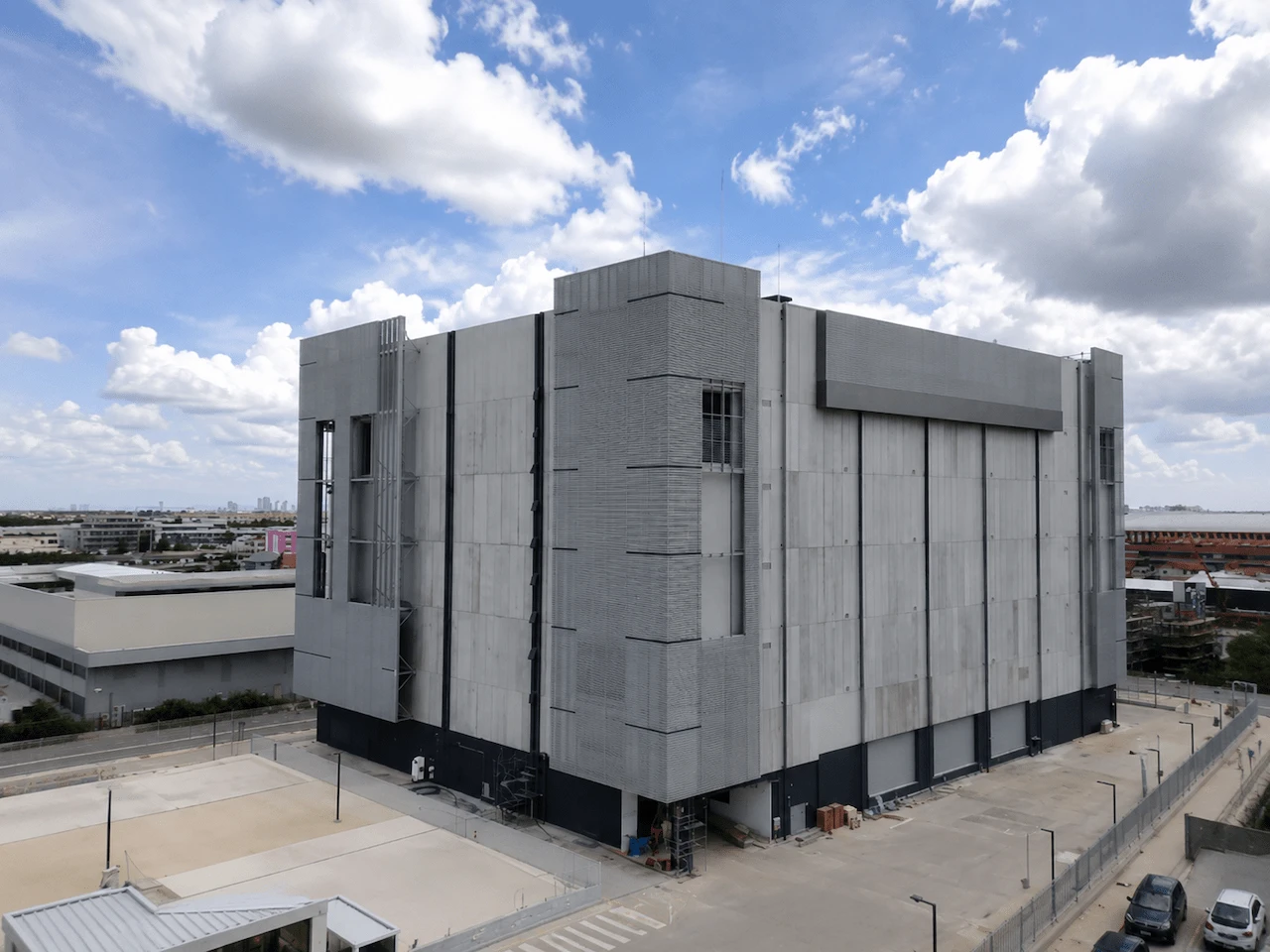
GSA Data Center 01
Optimizing mission-critical floor systems for Thailand's next-generation AI infrastructure with material-efficient prestressed hollow core slabs.
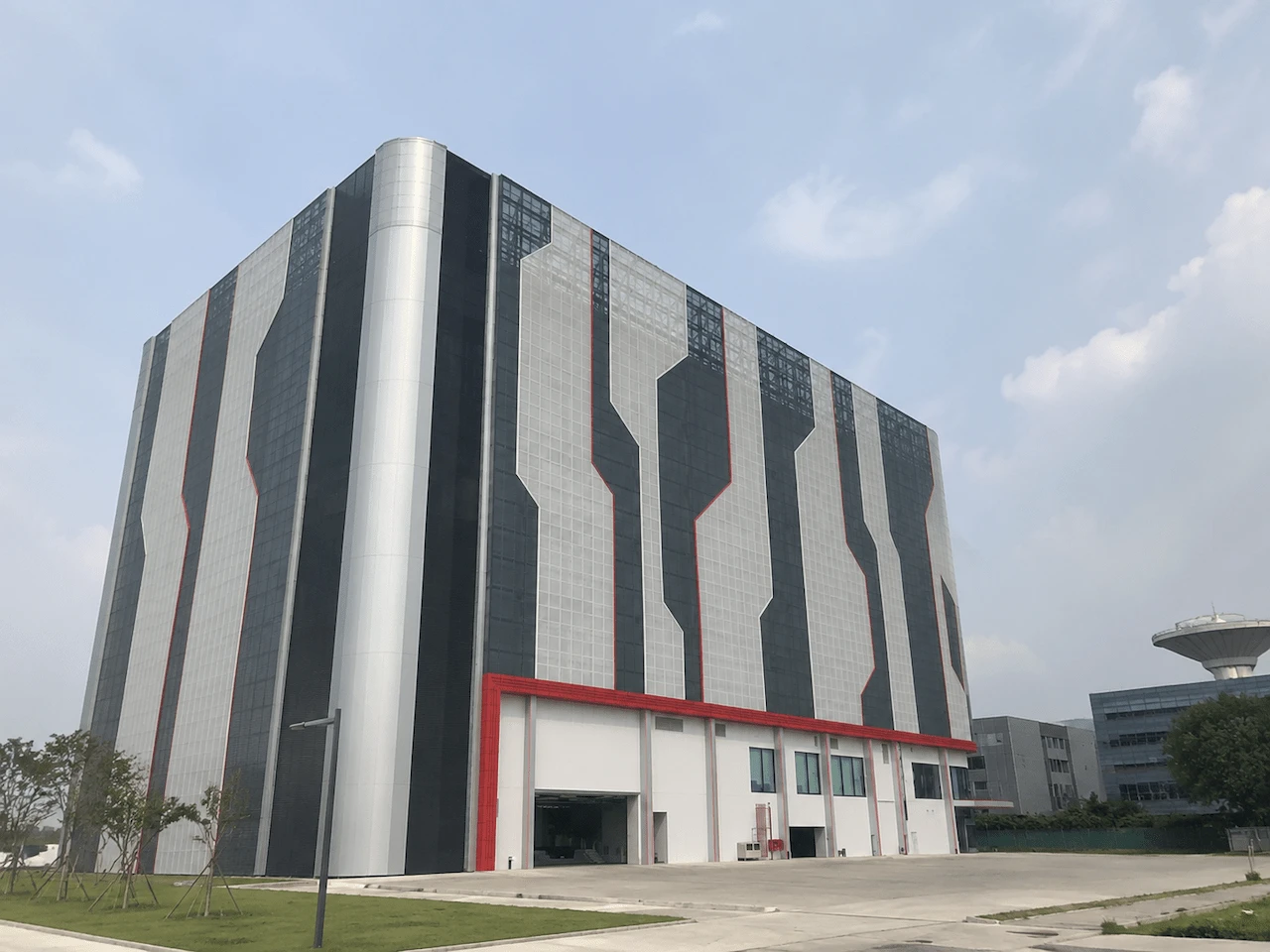
STT Bangkok 01
Delivering precision floor systems for a global hyperscale data centre through factory-controlled prestressed hollow core construction.
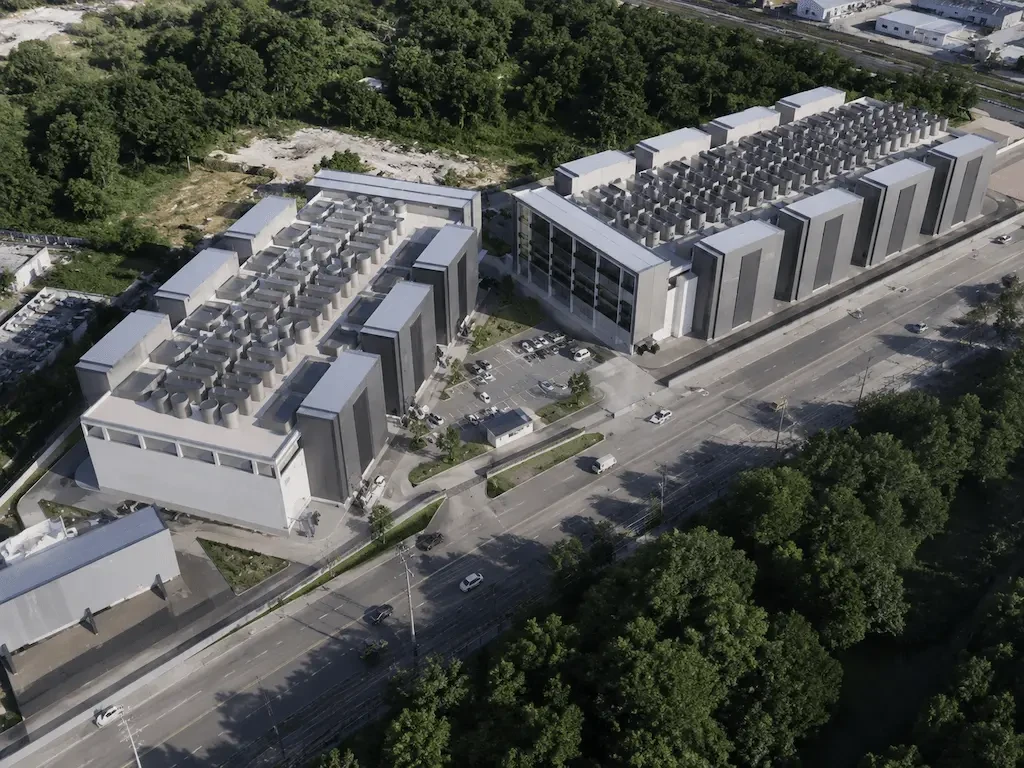
Topaz ECL Data Center
Supporting Thailand's next generation of AI-ready digital infrastructure with a lightweight, material-efficient structural floor system.
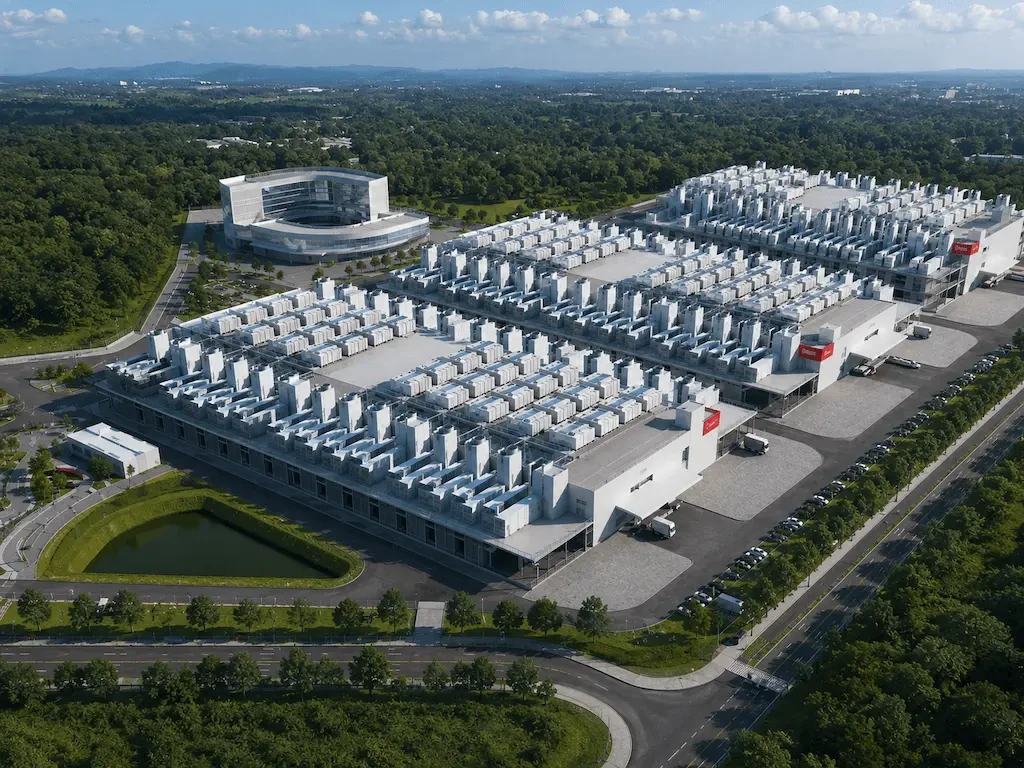
TERA Data Center Thailand
Building scalable digital infrastructure for the next generation of AI and cloud computing with an adaptable, material-efficient floor system.
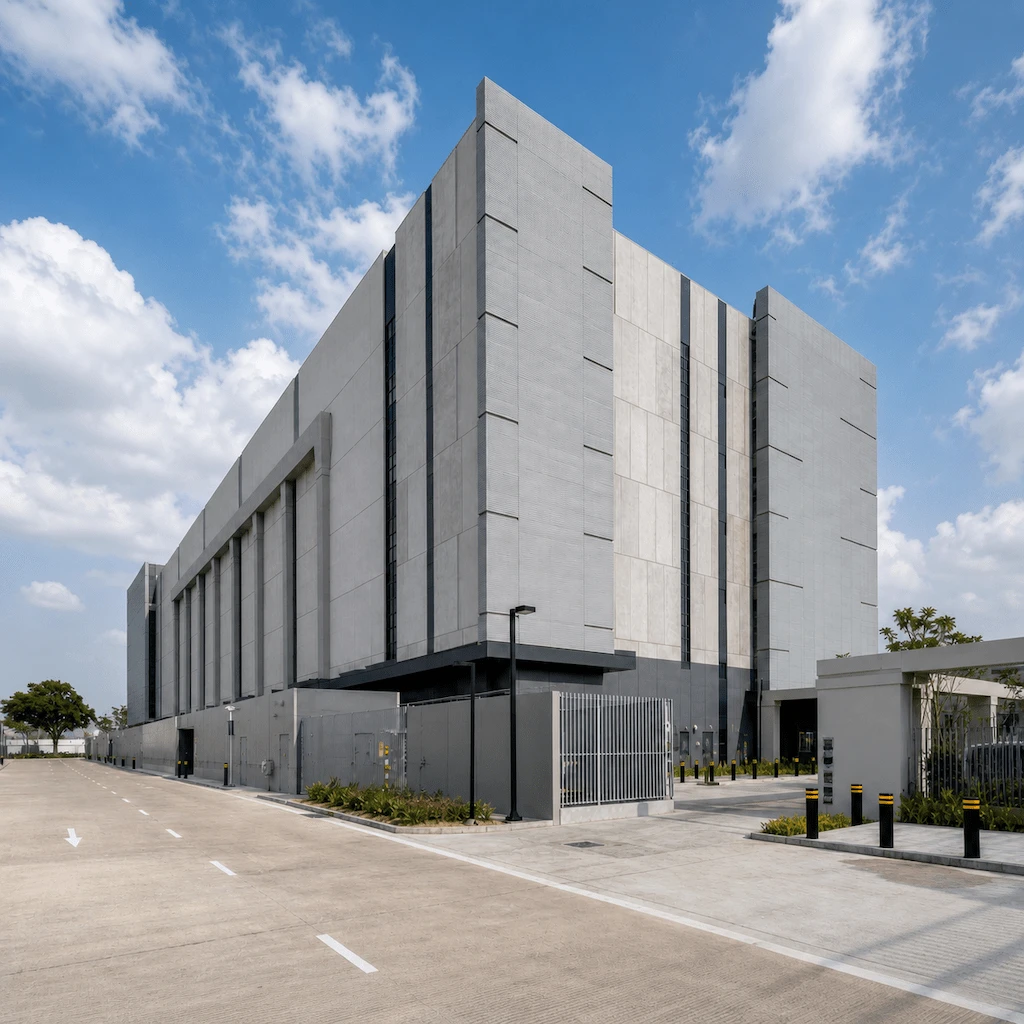
GSA Data Center 02
Scaling Thailand's next generation of hyperscale digital infrastructure with a lightweight floor system designed for up to 38 MW of IT capacity.
Case study
DAMAC Data Centers
Enabling Faster Delivery of Mission-Critical Digital Infrastructure
Project Overview
The rapid expansion of cloud computing, artificial intelligence, and digital services is driving unprecedented demand for new data center capacity across Southeast Asia. To remain competitive, developers must deliver facilities that meet demanding standards for quality, reliability, and speed without compromising long-term performance.
For the DAMAC Data Center project in Thailand, VCON supplied a precast concrete structural system that supported the efficient delivery of one of the region's next-generation mission-critical facilities. By combining factory-manufactured structural components with rapid on-site installation, the project demonstrated how industrialized construction can improve certainty during execution while helping owners bring critical infrastructure online sooner.
The Challenge
Data centers are unlike conventional commercial buildings. They require highly coordinated construction to accommodate complex electrical, mechanical, cooling, and IT infrastructure within demanding project schedules.
In addition to meeting aggressive delivery targets, the structural system needed to accommodate numerous slab penetrations and service openings for electrical distribution, cable trays, piping, and equipment installation. These openings are essential for supporting the extensive network of building services required in mission-critical facilities while maintaining structural integrity and construction efficiency.
At the same time, the project faced increasing pressure from volatility in construction material and energy costs, particularly rising oil prices, which significantly affected the cost of concrete production, transportation, and site operations. The owner therefore sought a structural solution that could optimize material usage, reduce the overall building weight, and lower embodied carbon without compromising structural performance.
Traditional cast-in-place construction can create challenges due to extensive formwork, weather dependency, labor availability, and longer structural cycles, all of which can delay subsequent trades and extend the overall project timeline.
The project therefore required a structural solution capable of supporting rapid construction, efficient integration of building services, and improved material efficiency.
The Structural Solution
VCON delivered a precast structural system incorporating prestressed hollow core slabs manufactured under controlled factory conditions.
The hollow core slab system was engineered to accommodate the numerous slab openings required for electrical distribution, cable trays, piping, and other building services throughout the facility. By incorporating these requirements into the structural design and manufacturing process, the project achieved efficient coordination between the structural and MEP disciplines while maintaining structural integrity and construction productivity.
The voided profile of the prestressed hollow core slabs significantly reduced the volume of concrete required compared with conventional solid floor systems. This optimized material usage reduced the overall structural weight of the building, helping lower foundation demands, transportation loads, and embodied carbon while providing greater cost certainty during a period of volatile construction material prices.
Producing structural components off-site also allowed fabrication to proceed simultaneously with foundation works, minimizing reliance on on-site formwork and reducing construction activities at ground level. Once delivered, the components were installed rapidly with consistent dimensional accuracy, enabling follow-on trades to begin work sooner and improving overall project coordination.
Project Impact
The use of precast concrete helped create a more efficient construction process by improving workflow throughout the structural phase.
Rather than focusing solely on structural speed, the project created a more predictable environment for subsequent construction activities, helping maintain project momentum from structure through commissioning.
Key Outcomes
- Accelerated structural completion through parallel manufacturing and site preparation
- Consistent factory-controlled quality and dimensional accuracy
- Reduced site congestion and dependence on on-site labor
- Earlier access for MEP installation and equipment fit-out
- Improved construction safety through fewer temporary works
- Lower material waste and a more sustainable construction process
Why It Matters
For mission-critical facilities, the structural system influences far more than the building frame. It affects coordination, scheduling, safety, construction efficiency, and ultimately the owner's ability to place new digital infrastructure into operation.
By adopting industrialized precast construction, developers can reduce construction risk, improve project certainty, and accelerate the delivery of facilities that support the growing demands of the digital economy.
Project Facts
- Project
- DAMAC Data Center
- Client
- EDGNEX Data Centres by DAMAC
- Location
- Thailand
- Industry
- Data Center
- Scope
- Precast Concrete Structural System
- Structural System
- Prestressed Hollow Core Slabs
- Construction Method
- Industrialized Off-site Manufacturing with Rapid On-site Installation
Case study
GSA Data Center 01
Optimizing Mission-Critical Floor Systems for Thailand's Next-Generation AI Infrastructure
Project Overview
GSA Data Center 01 (GSA01) represents one of Thailand's most advanced hyperscale data center developments. Developed as a joint venture between Gulf Development, AIS, and Singtel, the facility was designed to support the country's rapidly growing demand for cloud computing, artificial intelligence, and digital services. The 25.6 MW facility in Samut Prakan incorporates advanced liquid cooling technology and has been designed to achieve high standards of energy efficiency and operational reliability.
VCON supplied prestressed hollow core slabs for the project, providing a high-performance floor system that supported the project's demanding structural, coordination, and sustainability requirements.
The Challenge
Unlike conventional office or industrial buildings, data centers require floor systems capable of supporting heavy equipment loads while accommodating an extensive network of electrical, mechanical, cooling, and communication services.
For GSA01, the floor system needed to incorporate numerous service penetrations for cable trays, electrical distribution, piping, and future infrastructure upgrades without compromising structural performance or construction efficiency.
The project was also developed during a period of increasing volatility in construction material and fuel prices. Rising transportation and material costs placed greater emphasis on selecting structural solutions that optimized concrete consumption, reduced dead load, and improved overall project efficiency.
Rather than simply providing structural support, the floor system needed to balance strength, flexibility, sustainability, and long-term operational performance.
The Floor System Solution
VCON supplied prestressed hollow core slabs specifically engineered to meet the demanding performance requirements of a modern mission-critical facility.
The hollow core floor system provided long-span structural capability while significantly reducing the volume of concrete required compared with conventional solid slabs. The lighter structural system reduced the overall dead load imposed on the building while contributing to lower embodied carbon through more efficient material usage.
Equally important, the hollow core slab layout was coordinated with the project's structural and MEP design to accommodate the numerous openings required for electrical distribution, cable trays, piping, and building services. This helped simplify installation of critical infrastructure while maintaining construction quality and structural integrity.
Manufactured under factory-controlled conditions, each slab was delivered to site ready for installation, ensuring consistent quality, dimensional accuracy, and efficient construction.
Project Impact
Although VCON's scope focused on the floor system, its contribution played an important role in supporting the efficient delivery of the project.
The project demonstrates how selecting the appropriate floor system can improve construction efficiency while supporting the demanding operational requirements of modern AI-ready data centers.
Key Outcomes
- Optimized floor system using prestressed hollow core technology
- Reduced concrete consumption through a voided slab design
- Lower overall structural dead load
- Accommodation of extensive MEP service openings
- Consistent factory-controlled quality and dimensional accuracy
- Reduced embodied carbon through material-efficient construction
- Efficient installation supporting overall project progress
Why It Matters
In mission-critical facilities, floor systems do much more than support structural loads. They influence service coordination, construction efficiency, material consumption, and the long-term adaptability of the building.
Prestressed hollow core slabs provide an efficient structural solution by combining long-span capability, reduced structural weight, and material efficiency with the flexibility required for complex building services. For data center developers, these advantages contribute to more sustainable construction and improved project certainty.
Project Facts
- Project
- GSA Data Center 01 (GSA01)
- Client
- GSA Data Center 01 Company Limited
- Location
- Samut Prakan, Thailand
- Industry
- Hyperscale AI & Cloud Data Center
- VCON Scope
- Supply of Prestressed Hollow Core Slabs
- Application
- Mission-Critical Floor System
- Facility Capacity
- 25.6 MW
- Special Features
- AI-ready, Advanced Liquid Cooling Technology, Energy-Efficient Design
Case study
STT Bangkok 01
Delivering Precision Floor Systems for a Global Hyperscale Data Centre
Project Overview
STT Bangkok 01 is the flagship facility within the STT Bangkok Data Centre Campus, developed by ST Telemedia Global Data Centres (STT GDC), one of the world's leading data centre operators. Strategically located in Hua Mak, Bangkok, the seven-storey hyperscale facility provides up to 23 MW of IT capacity and forms part of one of Thailand's largest carrier-neutral data centre campuses built to international standards.
VCON supplied prestressed hollow core slabs for the project, contributing to the construction of a high-performance floor system designed to support the operational requirements of a mission-critical digital infrastructure facility. Manufactured under strict factory-controlled conditions, the hollow core slabs provided consistent quality, efficient installation, and an optimized structural solution for one of Thailand's most significant hyperscale developments.
The Challenge
As a hyperscale data centre developed to international standards, STT Bangkok 01 demanded a structural floor system capable of meeting stringent requirements for quality, reliability, and construction precision.
The floor system needed to support heavy operational loads while accommodating numerous slab penetrations for electrical distribution, cable trays, mechanical services, and future technology upgrades. Close coordination between the structural and MEP disciplines was essential to avoid construction delays and ensure efficient installation of mission-critical infrastructure.
The project was also executed during a period of significant volatility in construction material and energy costs. Rising oil prices increased the cost of concrete production, transportation, and site operations, placing greater importance on structural solutions that optimized material usage, reduced overall building weight, and lowered embodied carbon without compromising structural performance.
The Structural Solution
VCON supplied prestressed hollow core slabs specifically engineered for the demanding requirements of hyperscale data centre construction.
The hollow core slab system provided long-span floor construction while reducing the volume of concrete required compared with conventional solid slabs. This material-efficient design reduced the overall dead load of the structure, contributing to lower embodied carbon, reduced transportation requirements, and improved cost efficiency during a period of fluctuating material prices.
Each slab was coordinated with the project's structural and MEP requirements to accommodate numerous service penetrations for electrical distribution, cable trays, piping, and other mission-critical building services. Manufacturing in a controlled factory environment ensured consistent dimensional accuracy, allowing efficient installation and minimizing on-site adjustments during construction.
Project Impact
Although VCON's scope focused on the floor system, its contribution supported the delivery of a facility designed to meet the rigorous standards expected of a global hyperscale data centre operator.
The project demonstrates how precision-manufactured hollow core slabs can contribute to the efficient construction of mission-critical facilities where quality, coordination, and long-term operational reliability are essential.
Key Outcomes
- High-quality prestressed hollow core floor system manufactured under factory-controlled conditions
- Optimized concrete consumption through a lightweight structural design
- Reduced overall structural dead load
- Accommodation of complex MEP service coordination
- Consistent dimensional accuracy for efficient installation
- Reduced embodied carbon through material-efficient construction
- Reliable structural solution supporting international project standards
Why It Matters
For global data centre operators, construction quality is measured not only by speed but by consistency, precision, and long-term reliability.
Factory-manufactured prestressed hollow core slabs provide a repeatable, high-quality floor system that supports complex building services while reducing material consumption and structural weight. For owners developing mission-critical facilities, these advantages improve construction certainty and contribute to more sustainable, efficient, and reliable project delivery.
Project Facts
- Project
- STT Bangkok 01
- Client
- ST Telemedia Global Data Centres (Thailand)
- Location
- Hua Mak, Bangkok, Thailand
- Industry
- Carrier-Neutral Hyperscale Data Centre
- VCON Scope
- Supply of Prestressed Hollow Core Slabs
- Application
- Mission-Critical Floor System
- Facility Capacity
- 23 MW IT Load
- Facility Type
- Seven-storey Hyperscale Data Centre
- Special Features
- Carrier-neutral, International Standards, AI-ready Campus Development
Case study
Topaz ECL Data Center
Supporting Thailand's Next Generation of AI-Ready Digital Infrastructure
Project Overview
The Topaz ECL Data Center is part of the landmark Digital Edge and B.Grimm Power joint venture to develop one of Thailand's largest AI-ready hyperscale data center campuses within the Eastern Economic Corridor (EEC). As part of a US$1 billion investment program, the 100 MW campus has been designed to support hyperscale cloud providers, artificial intelligence workloads, and enterprise digital transformation while strengthening Thailand's position as a regional digital infrastructure hub. The project is also designed with sustainability at its core, targeting high energy efficiency and renewable-ready operations.
VCON supplied prestressed hollow core slabs for the project, providing a high-performance floor system that combined structural efficiency, reduced material consumption, and construction precision to support the development of this mission-critical facility.
The Challenge
AI-ready hyperscale data centers require structural systems capable of supporting high-density computing environments while accommodating increasingly complex mechanical, electrical, cooling, and communication infrastructure.
For the Topaz ECL project, the floor system needed to accommodate numerous slab penetrations and service openings for electrical distribution, cable trays, piping, and equipment installation. Careful coordination between the structural and MEP disciplines was essential to ensure efficient installation without compromising structural integrity.
The project was also developed during a period of significant volatility in construction material and energy costs. Rising oil prices increased the cost of concrete production, transportation, and site operations, placing greater emphasis on structural solutions that optimized concrete consumption, reduced overall building weight, and contributed to lower embodied carbon.
At the same time, construction was being accelerated to meet the growing demand for AI and cloud infrastructure, requiring structural solutions that could be manufactured with consistent quality and installed efficiently on site.
The Structural Solution
VCON supplied prestressed hollow core slabs engineered to meet the demanding performance requirements of hyperscale data center construction.
The hollow core slab system was designed to accommodate the numerous slab openings required for electrical distribution, cable trays, piping, and other building services. By integrating these requirements during the design and manufacturing stages, the project achieved improved coordination between structural and MEP works while minimizing on-site modifications.
The prestressed hollow core design significantly reduced the volume of concrete required compared with conventional solid floor systems. This material-efficient solution reduced the building's overall structural dead load, lowered transportation requirements, and contributed to reduced embodied carbon while maintaining the structural performance expected of mission-critical infrastructure.
Manufactured under factory-controlled conditions, each slab was delivered to site with consistent dimensional accuracy, supporting efficient installation and reliable construction quality.
Project Impact
VCON's prestressed hollow core slab system contributed to the efficient delivery of a next-generation AI-ready data center by providing a lightweight, high-performance structural floor solution.
The project demonstrates how carefully engineered floor systems can support the evolving requirements of AI-ready digital infrastructure while improving construction efficiency and sustainability.
Key Outcomes
- Optimized structural floor system for hyperscale data center applications
- Accommodation of extensive MEP service coordination and engineered slab openings
- Reduced concrete consumption through prestressed hollow core technology
- Lower overall structural dead load
- Consistent factory-controlled quality and dimensional accuracy
- Reduced embodied carbon through material-efficient construction
- Efficient installation supporting accelerated project delivery
Why It Matters
As artificial intelligence and cloud computing continue to reshape digital infrastructure, structural systems must deliver more than strength alone. They must support flexibility, sustainability, and efficient integration of increasingly sophisticated building services.
Prestressed hollow core slabs provide a lightweight, material-efficient floor system that enables better coordination between structural and MEP disciplines while reducing concrete consumption and embodied carbon. These advantages help developers deliver mission-critical facilities that are not only built faster, but are also better prepared for the future demands of AI-driven computing.
Project Facts
- Project
- Topaz ECL Data Center
- Developer
- Digital Edge & B.Grimm Power Joint Venture
- Location
- Eastern Economic Corridor (EEC), Chonburi, Thailand
- Industry
- AI-Ready Hyperscale Data Center
- VCON Scope
- Supply of Prestressed Hollow Core Slabs
- Application
- Mission-Critical Structural Floor System
- Campus Capacity
- 100 MW Hyperscale Campus
- Target Operation
- Phase 1 Ready for Service - Q4 2026
- Key Features
- AI-ready, Renewable-ready Infrastructure, Sustainable Design
Case study
TERA Data Center Thailand
Building Scalable Digital Infrastructure for the Next Generation of AI and Cloud Computing
Project Overview
TERA Data Centers is a rapidly growing multinational data center platform headquartered in Singapore, focused on developing large-scale hyperscale campuses across Asia. With strategic investments in Thailand, Malaysia, Indonesia, and other key markets, TERA is creating integrated digital infrastructure designed to support artificial intelligence, cloud computing, and enterprise workloads while emphasizing speed, scalability, and sustainability.
For TERA's Thailand development, VCON supplied prestressed hollow core slabs that formed part of the structural floor system supporting the construction of a next-generation hyperscale data center. The hollow core solution delivered an efficient combination of long-span performance, reduced structural weight, and construction precision, well aligned with TERA's vision of delivering scalable digital infrastructure for future growth.
The Challenge
Unlike traditional enterprise data centers, hyperscale campuses are designed with future expansion in mind. Every structural decision must support not only the initial phase of construction but also long-term scalability as additional capacity is added over time.
The project required a floor system capable of supporting high equipment loads while accommodating extensive electrical distribution, cable trays, chilled water piping, and other mission-critical building services. Numerous slab penetrations and service openings were incorporated to support efficient MEP installation without compromising structural performance.
At the same time, the project was developed during a period of increasing volatility in construction material and transportation costs driven by rising energy prices. The owner sought a structural solution that optimized concrete consumption, reduced the overall building weight, and supported its broader sustainability objectives.
The challenge was to provide a structural floor system that balanced performance, flexibility, sustainability, and long-term scalability.
The Structural Solution
VCON supplied prestressed hollow core slabs engineered to meet the demanding requirements of hyperscale data center construction.
The hollow core slab system accommodated the numerous slab openings required for electrical distribution, cable trays, piping, and future service modifications through careful coordination during the design and production stages. This improved coordination between structural and MEP disciplines while minimizing on-site alterations during installation.
By incorporating continuous longitudinal voids within each slab, the hollow core system significantly reduced concrete consumption compared with conventional solid floor systems. The lighter floor system reduced the building's overall dead load, improved transportation efficiency, and contributed to lower embodied carbon while maintaining the structural performance required for mission-critical applications.
Manufactured under factory-controlled conditions, every slab was produced with consistent dimensional accuracy before being delivered for efficient on-site installation.
Project Impact
VCON's prestressed hollow core slab system contributed to the efficient construction of a scalable digital infrastructure platform designed to support the next generation of cloud and AI services.
The project demonstrates how thoughtful structural engineering can help developers create digital infrastructure that is efficient to build today while remaining adaptable for tomorrow's growing demand for cloud and AI computing.
Key Outcomes
- Long-span prestressed hollow core floor system
- Optimized structural efficiency with reduced concrete consumption
- Lower overall structural dead load
- Accommodation of numerous MEP service openings
- Consistent factory-controlled quality and dimensional accuracy
- Reduced embodied carbon through material-efficient construction
- Flexible floor system supporting future expansion
Why It Matters
As hyperscale campuses continue to expand across Southeast Asia, structural systems must support more than immediate construction requirements. They must provide the flexibility, efficiency, and scalability needed to accommodate future growth while minimizing environmental impact.
Prestressed hollow core slabs provide a lightweight, material-efficient floor system that enables better coordination of complex building services while reducing concrete consumption and structural dead load. These advantages help developers build digital infrastructure that is not only faster and more sustainable but also prepared for future expansion.
Project Facts
- Project
- TERA Data Center Thailand
- Developer
- TERA Data Centers
- Headquarters
- Singapore
- Industry
- AI & Hyperscale Data Center
- VCON Scope
- Supply of Prestressed Hollow Core Slabs
- Application
- Mission-Critical Structural Floor System
- Development Strategy
- Campus-Based Hyperscale Infrastructure
- Key Focus
- Speed, Scalability & Sustainability
Case study
GSA Data Center 02
Scaling Thailand's Next Generation of Hyperscale Digital Infrastructure
Project Overview
Building on the success of GSA01, GSA Data Center 02 (GSA02) represents the next phase in the joint venture between GULF, AIS, and Singtel to expand Thailand's hyperscale digital infrastructure. Located within the Eastern Economic Corridor (EEC), the facility is designed with up to 38 MW of IT capacity to support the rapidly growing demand for artificial intelligence, cloud computing, and enterprise digital services.
VCON supplied prestressed hollow core slabs for the project, providing a lightweight and material-efficient floor system that supported the construction requirements of this next-generation mission-critical facility.
The Challenge
As hyperscale campuses continue to grow in both size and computing density, structural systems must provide more than strength alone. They must support large floor plates, efficient construction, and seamless integration of increasingly sophisticated building services.
For GSA02, the structural floor system needed to accommodate numerous slab penetrations and service openings for electrical distribution, cable trays, chilled water piping, and communication infrastructure while maintaining structural integrity and construction efficiency.
The project also progressed during a period of continued volatility in construction material and energy prices. Rising oil prices increased the cost of concrete production, transportation, and site operations, encouraging the adoption of structural solutions that optimized concrete consumption, reduced overall building weight, and lowered embodied carbon.
The challenge was to deliver a floor system that combined structural performance, construction efficiency, sustainability, and the flexibility required to support a rapidly expanding hyperscale campus.
The Structural Solution
VCON supplied prestressed hollow core slabs engineered to meet the demanding requirements of hyperscale data center construction.
The hollow core floor system was coordinated with the project's structural and MEP design to accommodate numerous service openings for electrical distribution, cable trays, piping, and other mission-critical infrastructure. This coordination minimized on-site modifications while improving the efficiency of subsequent MEP installation.
By incorporating continuous longitudinal voids, the prestressed hollow core slabs significantly reduced the volume of concrete required compared with conventional solid floor systems. The lighter structural floor reduced the overall dead load of the building, contributing to lower foundation loads, improved transportation efficiency, and reduced embodied carbon.
Manufactured under factory-controlled conditions, each slab was produced with consistent dimensional accuracy before being delivered for efficient on-site installation, supporting reliable construction quality throughout the project.
Project Impact
VCON's prestressed hollow core slab system supported the delivery of a scalable structural floor solution for one of Thailand's next-generation hyperscale data center developments.
The project demonstrates how optimized structural floor systems can support the continued expansion of hyperscale digital infrastructure while improving construction efficiency and sustainability.
Key Outcomes
- Lightweight prestressed hollow core floor system
- Accommodation of extensive MEP service coordination
- Numerous engineered slab openings for mission-critical infrastructure
- Reduced concrete consumption through material-efficient design
- Lower overall structural dead load
- Consistent factory-controlled quality and dimensional accuracy
- Reduced embodied carbon through optimized material usage
- Efficient installation supporting large-scale campus development
Why It Matters
As digital infrastructure continues to expand across Southeast Asia, hyperscale developments are increasing not only in capacity but also in complexity. Structural systems must therefore deliver efficient construction today while supporting the long-term growth of digital ecosystems.
Prestressed hollow core slabs provide a material-efficient, lightweight floor solution that improves coordination between structural and MEP disciplines while reducing concrete consumption and embodied carbon. These advantages help developers build scalable, future-ready facilities capable of supporting the next generation of AI and cloud computing.
Project Facts
- Project
- GSA Data Center 02 (GSA02)
- Developer
- GSA Data Center Company Limited (GULF, AIS and Singtel Joint Venture)
- Location
- Chonburi Province, Eastern Economic Corridor (EEC), Thailand
- Industry
- Hyperscale AI & Cloud Data Center
- VCON Scope
- Supply of Prestressed Hollow Core Slabs
- Application
- Mission-Critical Structural Floor System
- Planned IT Capacity
- Up to 38 MW
- Development Strategy
- Expansion of Thailand's Hyperscale Digital Infrastructure
Planning a data center project?
Engage our engineering team early in your design process to discover how VCON can help deliver your next mission-critical facility.